

Automatic Stacking Solution Palletizer Integrated with Cut‑to‑Length Lines
Share to : 


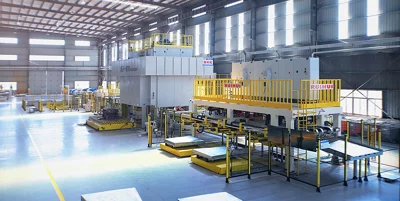
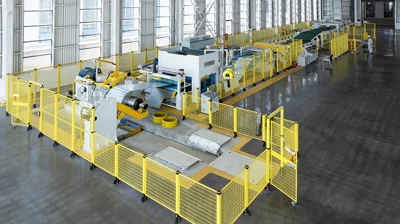
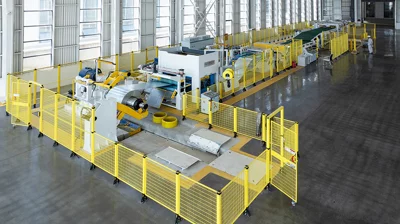
Cut‑to‑length lines shear coiled strip material into dimensioned sheets. How are the sheared sheets collected? Traditionally, workers stood at the end of the line, receiving and stacking sheets one‑by‑one — physically tiring, and the resulting stacks were often untidy. Today, a palletizer installed at the end of a cut‑to‑length line automates the stacking process. What does a cut‑to‑length line with a palletizer consist of? The key links are explained below.
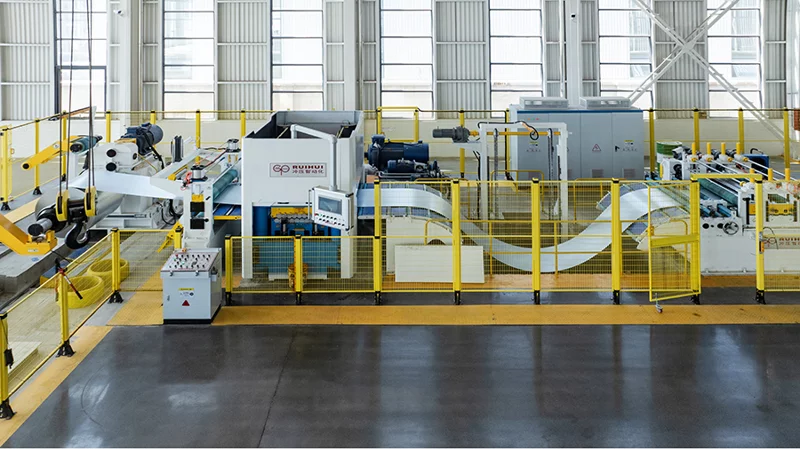
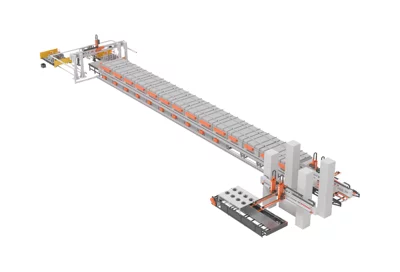
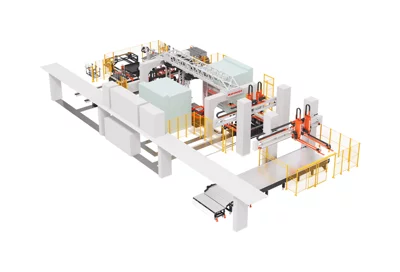
First, understand the position of the palletizer in the cut‑to‑length line. The line workflow comprises coil loading, uncoiling, leveling and cut‑to‑length shearing; the sheared sheets then enter the stacking stage. The palletizer is installed at the end of the line and is responsible for automatically stacking the sheared sheets into neat bundles. Sheets leaving the shearing unit are conveyed to a position above the receiving trolley, drop automatically onto the trolley and build up layer by layer; upon completion of a full stack, the trolley changes over automatically. The entire stacking process is automated, and workers do not touch the sheets.
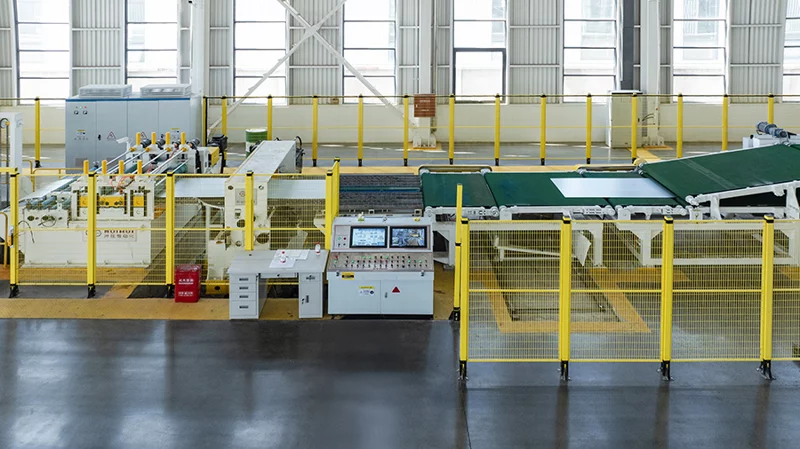
Next, select the stacking mode. Palletizers offer two modes — gravity stacking and magnetic stacking — matched to sheet material and surface requirements. Gravity stacking works with conveyors: sheets are conveyed and drop onto the receiving trolley by gravity, delivering high speed and suiting ordinary sheets with low surface‑quality requirements. Magnetic stacking works with magnetic belts, which transfer sheets onto the receiving table by magnetic force for superior surface protection; it requires magnetic material and accommodates various sheet profiles. For the sheets produced by cut‑to‑length lines, magnetic materials such as cold‑rolled steel and galvanized steel use magnetic stacking to protect surfaces; where surface requirements are low, gravity stacking is adopted for higher speed.
Stacking quality matters next. The palletizer must produce neat stacks, which is guaranteed in three ways. First, coordinated lifting of the receiving trolley: after each sheet is stacked, the trolley descends by one sheet‑thickness so that the receiving height and drop distance stay consistent, yielding neat stacks. Second, accurate positioning: sheets drop at consistent positions on the trolley, aligning stack edges. Third, smooth conveying: the transfer from the shearing unit to the receiving trolley must be steady, without deflection or sway, so that dropping positions remain accurate.
Trolley change and transfer follow. When one trolley is fully loaded, the system changes over automatically: the completed stack is conveyed out and an empty trolley moves in to continue stacking. The automatic trolley‑change function enables continuous, non‑stop production for the cut‑to‑length line. Completed stacks are transferred to storage or downstream processes by forklift or conveyor; the neat stack shape simplifies handling.
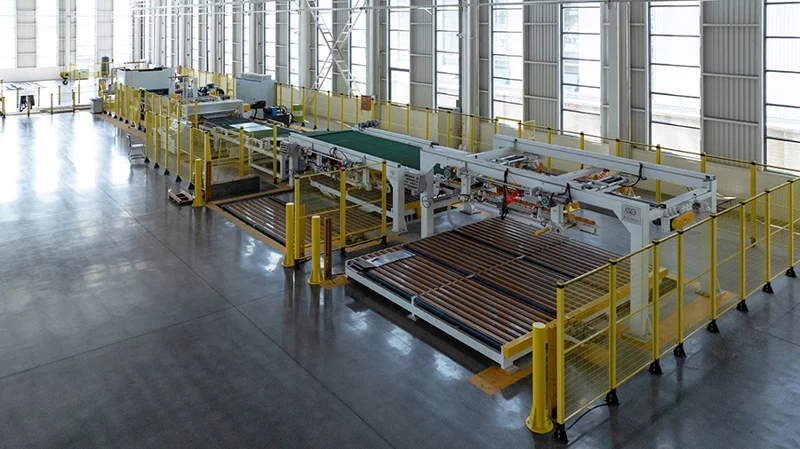
Integrating a palletizer with a cut‑to‑length line delivers clear benefits. First, manpower is saved. Previously, workers stood receiving and stacking sheets; now a single operator supervises the line, no longer bending to stack sheets, with labor intensity greatly reduced. Second, stack shape is consistent. Machine stacking produces uniform positions and force, forming neat, flat stacks convenient for storage, transfer and subsequent destacking. Third, efficiency improves. The palletizer runs continuously, matching the receiving speed to the shearing speed so that receiving never holds back the whole line. Fourth, quality is stabilized. Manual stacking easily damages sheet edges, whereas palletizer conveying and dropping are smooth and cause minimal sheet damage.
In essence, adding a palletizer to a cut‑to‑length line automates the most labor‑intensive receiving and stacking stage. Sheets are cut and automatically built into neat stacks; workers only monitor the line and change coils, allowing the cut‑to‑length line to operate at full efficiency.
Guangdong Ruihui Intelligent Technology Co., Ltd. has over 20‑year experience in stamping automation and is a national Specialized, Refined, Differential and Innovative “Little Giant” enterprise. Headquartered in Dongguan, it has more than 400 employees including over 80 R&D engineers. Ruihui supplies complete cut‑to‑length line solutions integrated with palletizers. Its palletizers support both gravity stacking and magnetic stacking with conveyors or magnetic belts. Coordinated receiving‑trolley lifting matched to sheet thickness secures neat stacks, while the automatic trolley‑change function realizes continuous production. These systems are widely applied at the end of cut‑to‑length lines for automotive, home‑appliance and electric‑motor industries. Nearly 5,000 sets of Ruihui‑manufactured equipment run at domestic and overseas customer sites, serving well‑known OEMs and Tier‑one suppliers such as BYD, Geely, Volkswagen, Tesla, BMW, Mercedes‑Benz, Honda and Jaguar Land Rover, with rich cut‑to‑length line integration experience.
With years of hands-on experience, I have honed my skills in navigating the complexities of global commerce, offering invaluable insights and solutions to address customer needs. My commitment to excellence and dedication to customer satisfaction ensure that I deliver exceptional service, guiding clients through every step of the trading process with confidence and proficiency.
You may also like
Related News
Latest Update