

How Upenders Ensure Smooth Flipping Without Stack Loosening or Sheet‑Sliding
Share to : 


When an upender flips a full sheet‑metal stack, stack collapse is the primary risk. Loose sheets lead to time‑consuming re‑sorting, equipment damage or even personal injury. Therefore, stable flipping with intact tidy stacks serves as the core performance indicator for upenders. Several combined measures prevent stack scattering and sheet displacement.
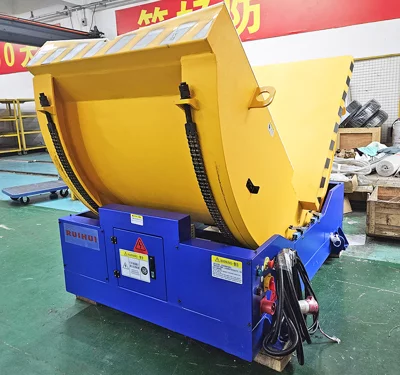
Firstly, reliable clamping devices are essential. After stacks are loaded into the frame, clamping units hold the stack firmly. Clamping force must be properly adjusted: insufficient force causes sheet shifting, while excessive force deforms sheet edges. High‑quality upenders adopt hydraulically‑adjustable clamping systems, with force tuned according to stack weight and sheet thickness. Flat contact surfaces avoid indentations on sheet surfaces.
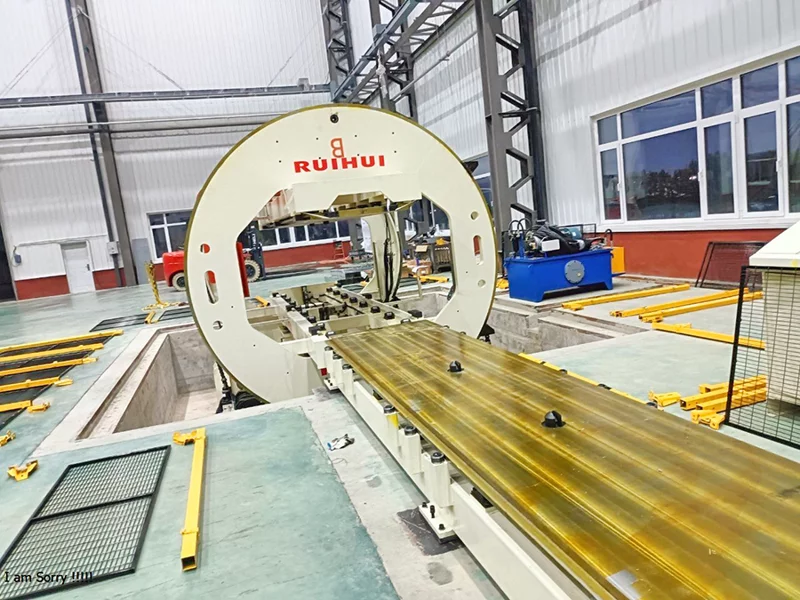
Secondly, sufficient structural rigidity of the flipping frame is required. The frame bears massive torque during rotation. Poor rigidity results in frame deformation, uneven clamping force and loose stacks. Premium upenders apply high‑strength welded frames with reinforced key load‑bearing sections to resist distortion. Rotating shafts and heavy‑duty bearings are selected to avoid shaft bending or jamming when handling multi‑ton stacks.
Thirdly, maintain smooth flipping speed. Sudden start‑stop generates large inertial or impact forces which may slide or shake apart stacks. Equipped with frequency‑conversion control or proportional‑valve control, qualified upenders offer adjustable rotation speed with acceleration‑deceleration buffering. Typical rotating speed ranges from 1 to 2 revolutions per minute, subject to stack weight and dimensions.
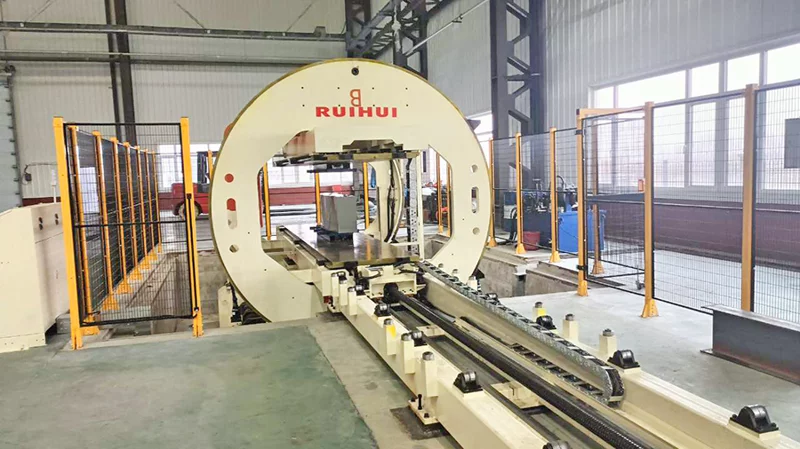
Fourthly, standardized stack feeding is required. Pre‑tilted or loose incoming stacks are prone to collapse during flipping. Incoming stacks shall be neatly stacked with minimal gaps between sheets. For strapped or stretch‑wrapped bundles, fastening integrity shall be checked before operation; defective bundles need re‑packaging.
Fifthly, comprehensive safety protection shall be implemented. Heavy‑load flipping entails major hazards caused by clamping failure or structural fracture. Clamping units feature self‑locking functions to prevent release upon power or hydraulic failure. Mechanical limit stops restrict over‑rotation. Operation interlocks ensure flipping can only start after operators evacuate hazardous zones. High‑end models are fitted with stack‑detection sensors that prohibit startup for misaligned or inadequately‑clamped stacks.
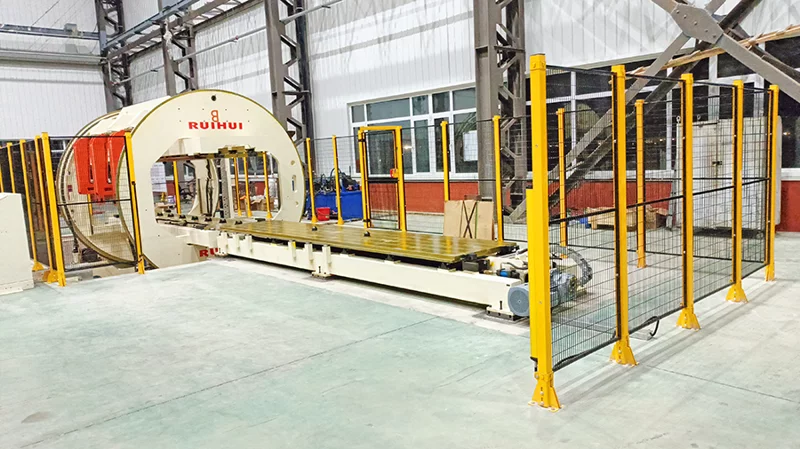
Upenders replace slow, unsafe and inaccurate manual flipping operations. Full‑stack turnover is completed within minutes via button‑only control, delivering precise rotation, intact stacks and improved operator safety. Stable clamping, rigid frame construction and smooth motion control solve the critical problem of stack scattering, which cannot be reliably achieved by manual work.
Guangdong Ruihui Intelligent Technology Co., Ltd. has over 20‑year experience in stamping automation and is a national Specialized, Refined, Differential and Innovative “Little Giant” enterprise. Headquartered in Dongguan, it has more than 400 employees including over 80 R&D engineers. Ruihui delivers proven C‑frame upender solutions with hydraulic drive, dependable clamping and smooth adjustable rotation to keep stacks intact during flipping, widely adopted for automotive and home‑appliance sheet‑bundle turnover. Nearly 5,000 sets of Ruihui‑manufactured equipment run at domestic and overseas customer sites, serving well‑known OEMs and Tier‑one suppliers such as BYD, Geely, Volkswagen, Tesla, BMW, Mercedes‑Benz, Honda and Jaguar Land Rover.
With years of hands-on experience, I have honed my skills in navigating the complexities of global commerce, offering invaluable insights and solutions to address customer needs. My commitment to excellence and dedication to customer satisfaction ensure that I deliver exceptional service, guiding clients through every step of the trading process with confidence and proficiency.
You may also like
Related News
Latest Update