

Can Laser Blanking Lines Cut Complex‑Shaped Hardware Accessories
Share to : 


Hardware accessories come in a wide variety of shapes, including round, square, arc‑shaped, perforated and other special‑profiled parts. In the past, blanks for these components were produced by die blanking, where one die corresponded to one shape. Die development took a long time, and new dies had to be manufactured for design modifications. With the growing adoption of laser blanking lines, many hardware manufacturers wonder whether such lines can process blanks with complex geometries. The answer is yes, and handling complex shapes is one of the core strengths of laser blanking lines.
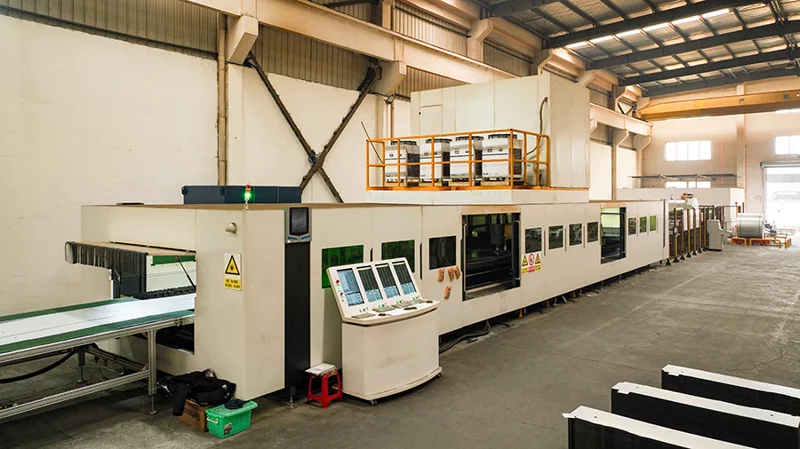
This is because laser cutting requires no physical dies; cutting paths are fully controlled by programs. Operators only need to draw part geometries on a computer and import them into the system. Circular holes, square holes, arcs, inclined surfaces and special profiles can all be cut as long as they can be programmed. Producing special‑shaped parts with conventional die blanking calls for custom dies with long lead times and poor flexibility. By contrast, laser blanking lines need only program adjustments regardless of part complexity.
Laser blanking lines deliver additional practical benefits when producing complex‑shaped blanks for hardware accessories.
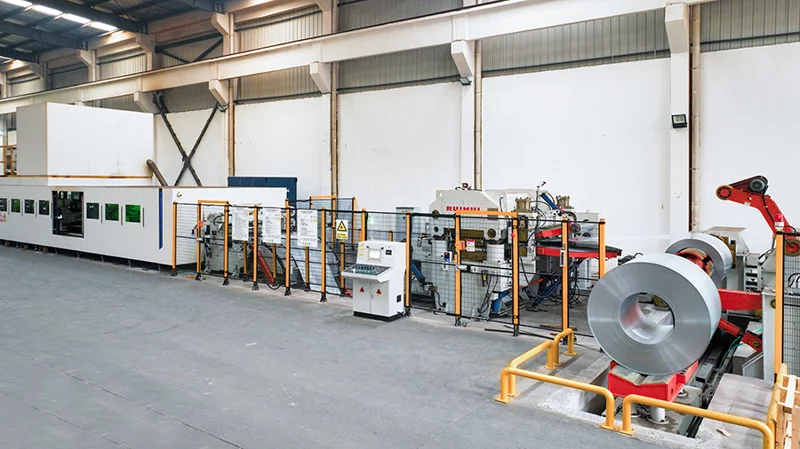
First, common‑line cutting saves raw materials. During nesting, complex‑shaped parts can be arranged compactly. Adjacent components can share one cutting seam, which reduces material consumption and shortens cutting time. Built‑in automatic nesting software optimizes layout for complex profiles and achieves much higher material utilization than traditional die blanking. Since material accounts for a large proportion of hardware production costs, material savings bring considerable economic benefits.
Second, fast product changeover. Hardware accessories feature numerous types and specifications, with frequent shape switches. Switching products on a laser blanking line simply means loading a new program. Transitioning from Shape A to Shape B takes only several minutes without die replacement or re‑alignment. This advantage is prominent for hardware production characterized by multiple product types, small‑batch sizes and frequent changeovers.
Third, superior cutting‑edge quality. Laser cutting creates narrow kerfs with minimal heat‑affected zones, delivering smooth edges with few burrs. For hardware accessories requiring good edge quality, low burr levels facilitate downstream processing and eliminate separate deburring operations. Especially for small complex parts with intricate contours, laser cutting provides better precision than die blanking.
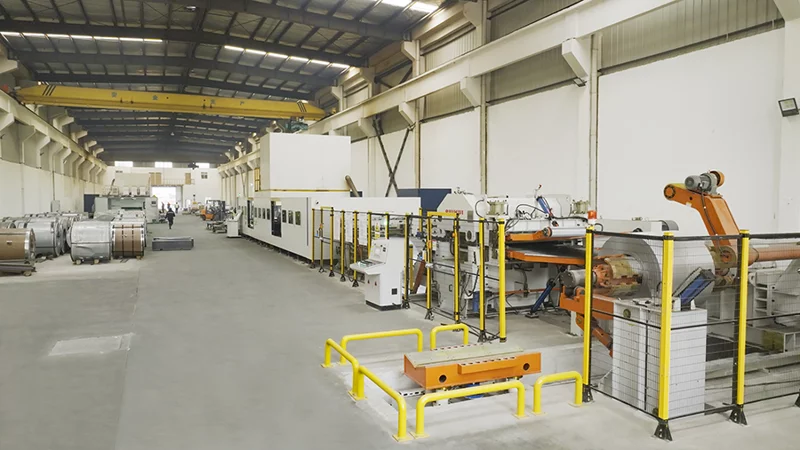
Nevertheless, several practical factors should be considered when cutting complex shapes with laser blanking lines. Firstly, part dimensions: laser blanking lines work within a certain size range, so ultra‑large or ultra‑small workpieces require capability evaluation. Secondly, material compatibility. Hardware accessories cover carbon steel, stainless steel, aluminum and other materials. Laser parameters must be adjusted accordingly to ensure consistent cutting quality across different materials. Thirdly, production batch size. Die blanking holds efficiency advantages for single‑specification mass production of complex parts, whereas laser blanking lines are better suited for multi‑variant production with frequent changeovers.
One point to clarify: a laser blanking line cuts coils or sheets into blanks, which are then sent for stamping and forming. These are two sequential processes. Laser blanking enables flexible and efficient blank preparation while subsequent stamping follows existing workflows. Their combination greatly improves production efficiency for hardware accessories.
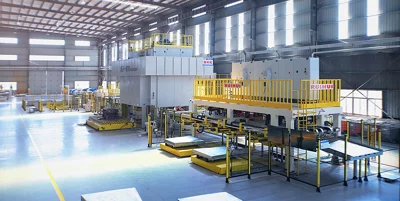
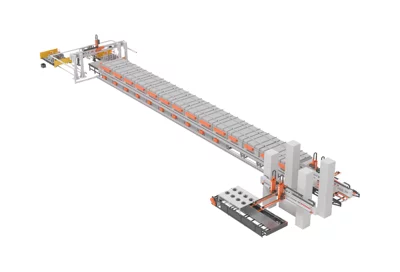
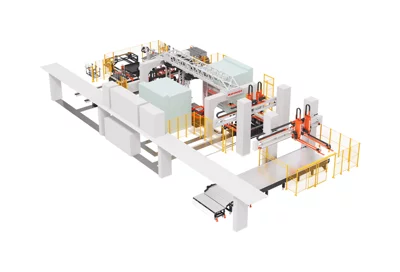
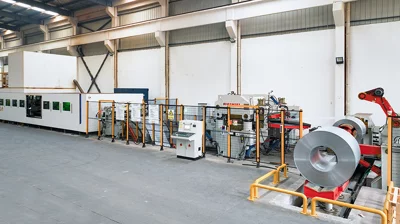
Guangdong Ruihui Intelligent Technology Co., Ltd. has more than 20 years of experience in stamping automation and is a national Specialized, Refined, Differential and Innovative “Little Giant” enterprise. Headquartered in Dongguan, it employs over 400 staff including more than 80 R&D engineers. Ruihui’s laser blanking lines are well‑proven in the hardware industry. To meet demands for cutting complex‑shaped hardware blanks, the company provides complete line solutions covering uncoiling, leveling, servo feeding, laser cutting, sorting and stacking. Cutting paths are program‑controlled, supporting common‑line cutting and automatic nesting. Laser power and feeding accuracy can be customized according to sheet material and dimensions. Nearly 5,000 sets of Ruihui‑manufactured equipment are operating for domestic and overseas customers. The company serves well‑known OEMs and Tier‑one suppliers such as BYD, Geely, Volkswagen, Tesla, BMW, Mercedes‑Benz, Honda and Jaguar Land Rover, with abundant experience in hardware sheet metal processing.
With years of hands-on experience, I have honed my skills in navigating the complexities of global commerce, offering invaluable insights and solutions to address customer needs. My commitment to excellence and dedication to customer satisfaction ensure that I deliver exceptional service, guiding clients through every step of the trading process with confidence and proficiency.
Related Topics:
laser blanking lineYou may also like
Related News

Latest Update