

Automatic Palletizer – Automated End‑of‑Line Stacking Equipment for Stamping Production Lines
Share to : 


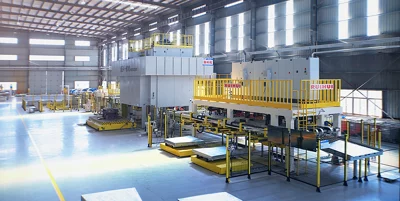
In the past, at the end of many sheet metal blanking lines, workers had to manually remove each freshly stamped part from the conveyor belt and neatly stack it onto pallets. This was especially taxing during large‑batch production runs, when several workers had to work continuously around the output end. Not only was the physical effort enormous, but after long periods of repetitive stacking, workers slowed down and dragged down the overall discharge rhythm of the blanking line. The parts were often stacked unevenly, and during subsequent transfer, they were prone to bumps and deformation. Today, automatic palletizers specifically designed for blanking scenarios have fully automated the end‑of‑line stacking process. They can neatly and uniformly stack parts onto pallets without manual supervision, helping factories close the final gap in fully automated blanking production.
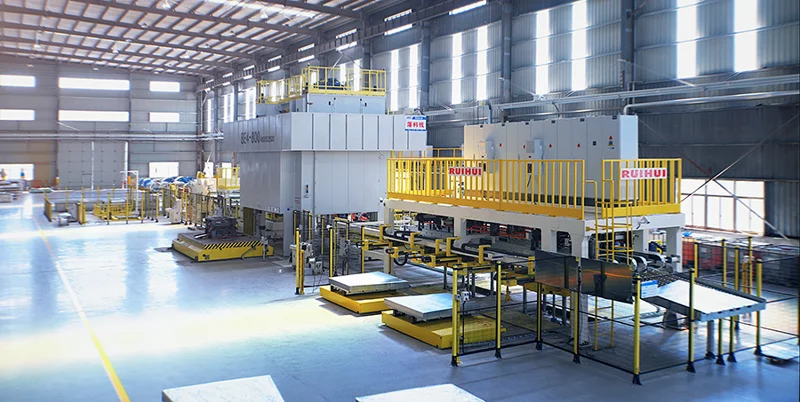
The variety of workpieces in blanking applications is enormous—ranging from small sheet metal blanks weighing just a few kilograms to large automotive structural blanks weighing several tens of kilograms—and the automatic palletizer can handle them all with ease. It typically uses gravity stacking or magnetic stacking methods, suitable for various types of sheets and special requirements. The machine's operating parameters can be flexibly adjusted via a touchscreen. For different sizes and weights of parts, you simply preset the corresponding number of layers and the arrangement pattern for each layer, and the palletizer automatically completes the stacking. Changing over between products takes only about ten minutes to switch parameters, fully accommodating the multi‑variety order mix common in blanking workshops.
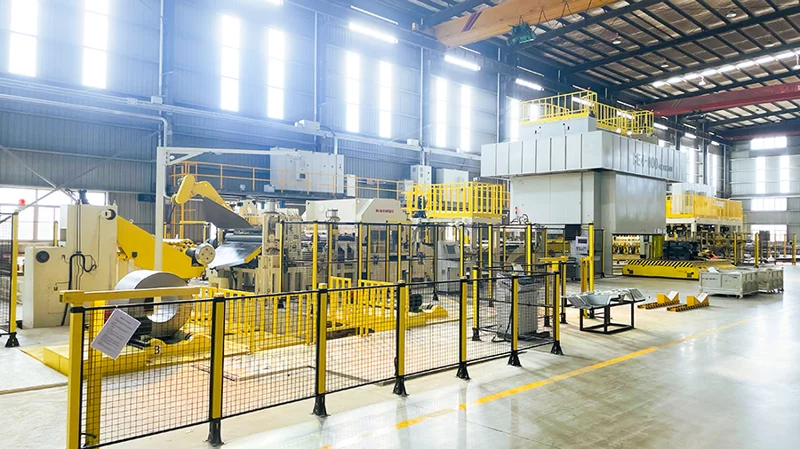
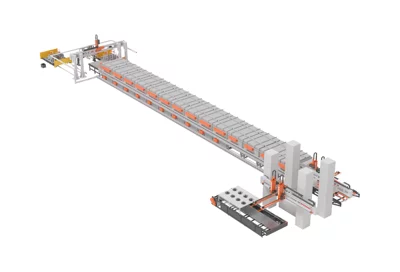
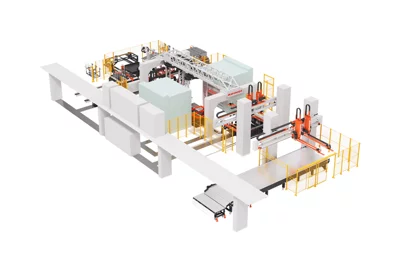
The entire automatic palletizer can be seamlessly integrated with the upstream blanking line and the output conveyor. After the blanking press produces parts, they are delivered via conveyor to the stacking station. A vision inspection system first confirms the position and orientation of each part, and then the palletizer immediately grips and positions the part precisely, stacking it neatly onto the waiting pallet according to the preset layout rules. Once a full pallet of parts is completely stacked, the system automatically triggers the pallet conveyor mechanism, sending the fully loaded pallet out of the station while simultaneously bringing an empty pallet into the stacking area—all without manual intervention. The entire blanking line can thus run continuously for extended periods in unattended mode, with no need to stop due to a shortage of manpower at the end of the line. Many factories have reported that before, they had to rotate workers every two hours to rest; now, with the automatic palletizer, the line can run 24/7 steadily, significantly boosting overall capacity.
Some may worry that the complex workshop environment—with processing oils, metal chips, and debris—could cause frequent malfunctions in the palletizer. However, the automatic palletizers specifically designed for blanking applications are built with protective optimizations. The key transmission components are sealed to prevent contamination from oil splashes and metal particles, ensuring long‑term trouble‑free operation. The machine also includes an anomaly detection function. If a part is mispositioned, the system immediately stops feeding and triggers an alarm, avoiding forced stacking that could cause parts to drop and deform, or result in misaligned stacks and collapses. The finished stacks are well‑arranged and stable; when forklifts move them later, the entire stack remains steady without scratches or dents, further improving the intact rate of blanked parts.
Guangdong RuiHui Intelligent Technology Co., Ltd. has over twenty years of practical experience in full‑process blanking automation, and has developed mature automatic palletizer solutions specifically for end‑of‑line stacking in blanking production. RuiHui's equipment has been deployed on numerous blanking lines for automotive sheet metal and home appliance parts. Many customers have reported that after installing the automatic palletizer, they not only eliminated the repetitive manual stacking work but also completely solved the problem of manual stacking slowing down the line's overall rhythm. This truly enables unattended blanking production from coil loading to finished part palletizing.
For factories that have already automated their upstream blanking processes, adding a well‑matched automatic palletizer at the end of the line is the best choice to close the final gap in full automation. It eliminates the need for dedicated staff to perform repetitive manual handling at the output end, taking the operational efficiency and automation level of the entire blanking line to a new height.
With years of hands-on experience, I have honed my skills in navigating the complexities of global commerce, offering invaluable insights and solutions to address customer needs. My commitment to excellence and dedication to customer satisfaction ensure that I deliver exceptional service, guiding clients through every step of the trading process with confidence and proficiency.
You may also like
Related News
Latest Update